
The Digital Marketing Tactic That Made the Biggest Difference: Teaching Before Selling
Most of us have tried a little of everything in digital marketing. Posting daily, chasing trends, tweaking bios, testing hashtags, rewriting captions at midnight. Some of it helped, and a lot of it was just motion.
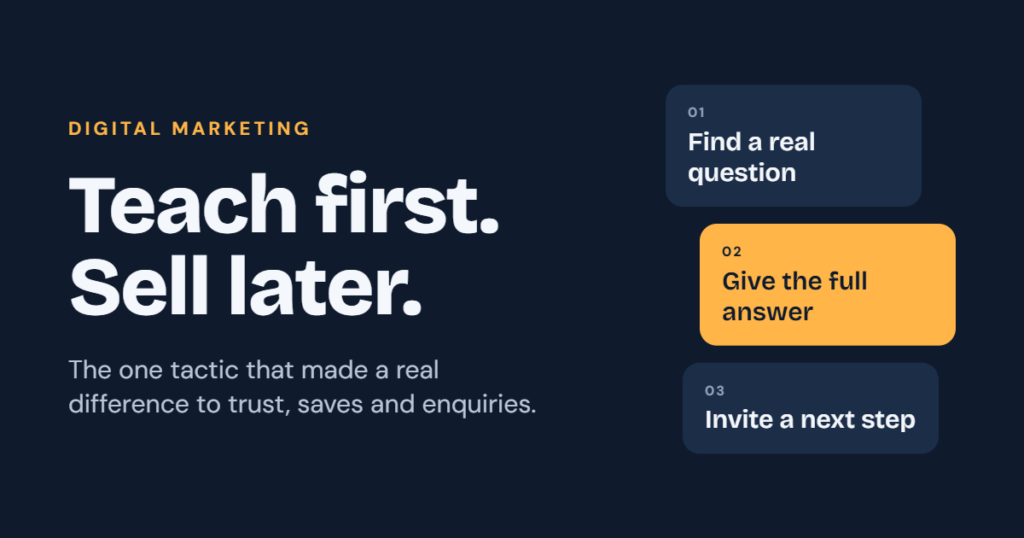
The one tactic that changed things for me wasn’t new or clever. It was simple: teach something useful first, and let the selling come later.
The Tactic: Value-First Content
Value-first content means every post answers a real question your audience already has. It doesn’t announce a service or push an offer. It explains something, clears up a confusion, or shows how to do one small thing properly.
For a beginner in digital marketing, that might look like a carousel called “Why Your Posts Get Views but No Followers” instead of “Book a Strategy Call Today.” The first helps someone on the spot. The second asks for something before you’ve given anything.
Why It Works
It builds trust before anyone asks for it
People are tired of being sold to. When someone learns something from your post, you’ve already shown them you know what you’re talking about, and that does more than any claim in your bio.
It earns saves and shares
A post that solves a problem gets saved for later or sent to a friend. Both signals tell a platform like Instagram that the content is worth showing to more people. A clever caption can’t buy that kind of reach.
It makes the sales conversation easier
When someone reaches out after reading your content for a few weeks, they already understand your thinking. You’re no longer convincing a stranger. You’re continuing a conversation that started a while ago.
How to Put It Into Practice
Start with one real problem
Don’t begin with “what should I post?” Begin with “what do people keep asking me?” Questions from comments, DMs, and client calls are the best source of topics, because they come straight from your audience.
Some examples:
- “How often should a small business post on social media?”
- “What’s the difference between reach and impressions?”
- “Why isn’t my content getting any engagement?”
Each of these can become a carousel, a short video, or a blog post.
Give the full answer
This is where many people hold back. They share half the advice and tease the rest, hoping people will pay for it. It usually backfires. If your free content is genuinely useful, people assume your paid work is even better.
Make it easy to follow
Good educational content is clear, not complicated. One idea per slide. Plain words instead of jargon. A real example for every point. If a beginner can finish your post and do something with it right away, it did its job.
A Simple Example
Say you run a small bakery and want more local customers. A promotional post might read: “Order our fresh cakes today!”
A value-first version might be a short guide titled “How to Choose the Right Cake Size for Your Event.” It covers how many guests each size serves, which flavors hold up best in warm weather, and how far ahead to order. Nobody feels sold to, but everyone reading it is a potential customer, and they now know where to order.
The same approach works for a consultant, a freelancer, a clinic, or an online store. Content marketing works best when it starts from what the audience needs.
Mistakes to Avoid
Posting without a clear point. If you can’t say in one sentence what a post teaches, it isn’t ready.
Copying what everyone else says. Generic advice gets scrolled past. Add your own experience, your own examples, and the things you’ve learned the hard way.
Expecting overnight results. Value-first content builds slowly. In my experience, the change shows up over weeks, not days: more thoughtful comments, more saves, and more people mentioning that they’ve been following along.
Never inviting action. Teaching doesn’t mean you can’t ask for anything. End with a gentle next step, like a follow, a related guide, or an invitation to message you with questions.
How to Tell If It’s Working
Don’t judge it by likes alone. Look at:
- Saves and shares, which show real usefulness
- Quality of comments and questions
- Direct messages and inquiries
- Profile visits and follower growth over a month or two
- Website clicks or enquiries that mention a specific post
If those numbers move in the right direction, you’re on the right track even when your like count stays modest.
Final Thoughts
Plenty of digital marketing tactics look impressive and deliver very little. The ones that last tend to be the least flashy: understand your audience, answer their questions honestly, and show up consistently.
Teaching before selling made the biggest difference because it changed how people saw the work. Instead of one more account asking for attention, it became a place worth coming back to. If you’re deciding where to focus your next month of effort, start with one real question your audience has, and answer it as well as you can.